english history · european history · history · medieval history

A Bloody Summer: The Peasants Revolt of 1381

The summer of 1381 was a particularly tumultuous year in English history. Unlike many rebellions up to that point, the Peasants Revolt of 1381 was initiated by the lower classes. This revolt placed fear in the hearts of the English upper-class. Their ideas were progressive for their era, though their methods proved to be violent. I found this research to be fascinating and I noticed many common issues that we are still dealing with in today. These included handling the aftermath of a devastating pandemic, widening class divisions, out of touch government officials, taxation that does not represent the wants of the people, and an increase in the cost of living. The Peasants Revolt of 1381 was short but left a lasting legacy in history.

There are many factors that led to the Peasants Revolt in 1381. The Black Death swept into England in 1348 and caused a pandemic that eliminated nearly half of the population. This devastated the economy as a majority of the workforce had disappeared. Due to this labor scarcity, the lower classes found they had the advantage in the job market. They could demand higher wages and it was an employee market. With this newfound change in fortune, the lower classes could obtain more resources than ever before. A better station in life was finally an attainable goal.  This was something that the upper classes disliked, as it was starting to encroach on the established hierarchy, as the feudal system was still alive and well.

 In 1351 parliament passed the Statute of Laborers which prohibited higher wage requests or offering higher wages than what they were prior to the plague. The punishment for this would be large fines and imprisonment. Despite the increase in demand for workers and more opportunities available, this law ensured the laborers were still forced to remain destitute. It was obvious to the lower classes that these laws would destroy any chance they had of upward mobility, which naturally caused anger amongst the people.
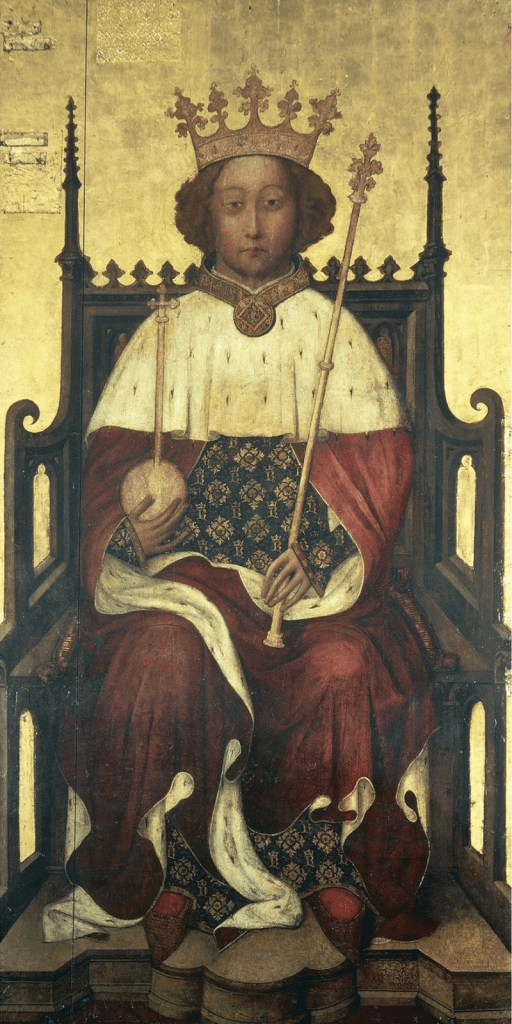
Westminster Portrait of Richard II at Westminster Abbey, London

The worst offence was the revival of the poll taxes. England had been fighting a war with France off and on (a conflict now known as the Hundred Years War). The burden of war had been constant for decades and was a large load upon the taxpayers. England was losing the war and there were no signs that it would improve. In 1377, 10-year-old Richard II inherited the throne after the death of his grandfather, Edward III. It would be difficult, as an average citizen, to have confidence that a child would be able to improve this situation.

The young Richard II inherited a tough situation militarily and economically. As a minor, he was reliant on those of his council which included his uncle, the unpopular John of Gaunt, and Simon of Sudbury, Archbishop of Canterbury. A poll tax was established which determined a standard amount of money to be taken from every man and woman above the age of fourteen, regardless of how much income one made. It served two purposes for the government: further funds for the war effort and it would prevent the lower classes from getting richer. Three poll taxes were passed within a four-year span and created more tension between the classes. People began to avoid paying these taxes, so the government appointed commissioners and tax collectors to enforce them.

The rebellions began primarily in the counties of Essex and Kent. The King began to send tax collectors to the villages to resolve the frequent tax evasion. In one instance, the villagers of Fobbing refused to pay. The tax collector, with the support of the military to enforce his demands, began to threaten the villagers. Yet, the people of Fobbing continued to hold strong and fought back against the soldiers attempting to arrest them. The mob drove out the soldiers with bows and arrows and the threat of violence. These were the first rebels to take arms and act and inspired others to act as well.

Details of what happened spread quickly throughout the villages and the common folk began to mobilize. In early June, Rochester Castle was taken by the rebels as they overwhelmed the guards stationed there. They plundered the castle and released prisoners. This showed that they had the strength and the numbers to have their revolt become a real threat.
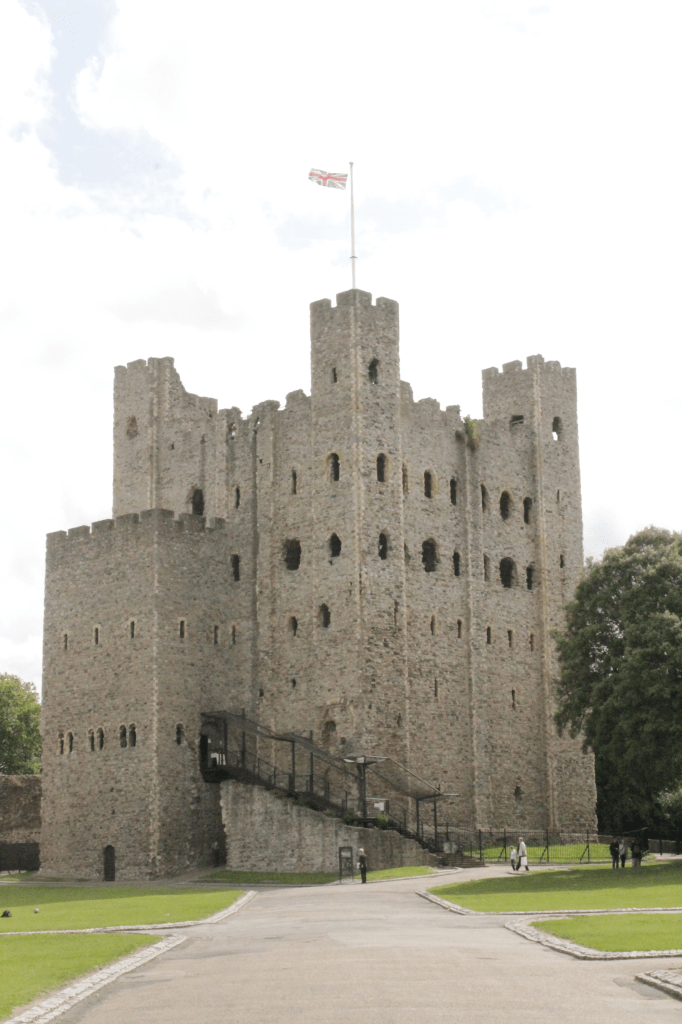
Rochester Castle, Wikipedia

Two leaders began to emerge from this chaos: Wat Tyler and John Ball. Wat Tyler was a craftsman from Essex and likely a former soldier who had been in battle on the continent. He proved to be a natural leader as the rebels began to make their way towards London. One of the prisoners released along the way included the radical priest, John Ball. Ball was very progressive for his time and had been arrested by the Archbishop of Canterbury for heresy. Ball preached against inequality, the corruption of the church, and tyranny. “When Adam delved and Even span, who then was the gentleman?” declared John Ball to the rebels in a sermon shortly after his release. He believed that there should be an end to lordship and church hierarchy in general. This was an extremely radical concept at that time but built the foundation for future revolts. In the Declaration of Independence, it is written, “We hold these truths to be self-evident, that all men are created equal,” which echoes some of the sentiments Ball expressed.

Wat Tyler and John Ball brought together a common mission for the peasant rebels which united them into a strong force that continued the advance towards London. They wanted the opportunity to bring their grievances directly to the King (who they believed was ill advised by his counsel). The fall of Rochester Castle and Canterbury showed that the rebels were a real threat to the government in London. The King and his council had installed themselves in the Tower of London for their own safety as they knew the rebels approached.
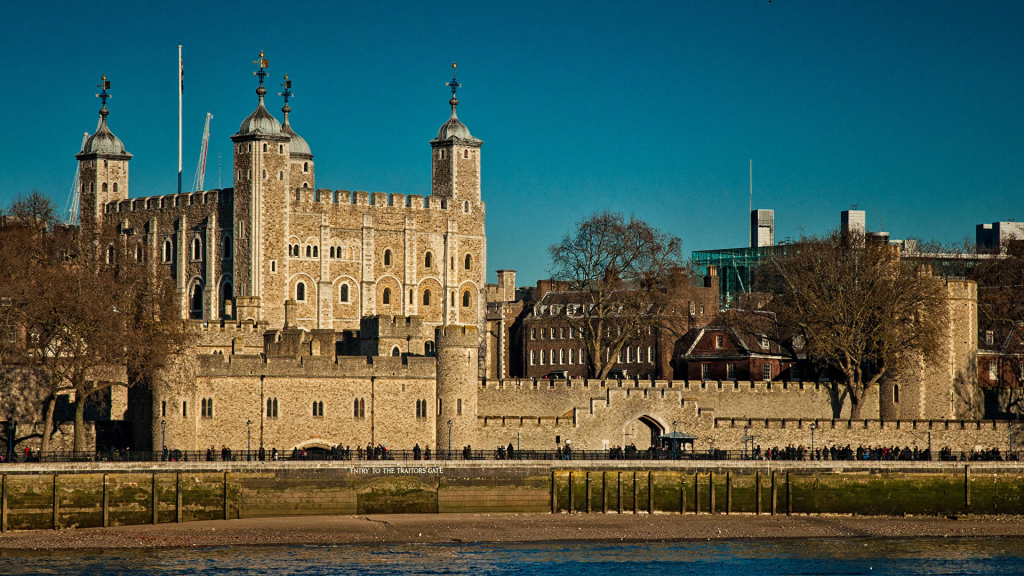
Tower of London

It is estimated the rebels numbered about 60,000 upon arrival in London on. On June 13th, the rebels made it through the gates and proceeded to destroy, loot, pillage, released prisoners, and burn legal/government documents. They began to collect more supporters from the lower classes of London, who had their own personal grievances. The rebels targeted the homes of those on the council. They attacked the manor home of the Archbishop of Canterbury, Simon of Sudbury, and looted and destroyed the home and his belongings. The New Temple, run by the Knights Hospitaller, was targeted to burn the legal documents stored there.

One of their main targets was the Savoy Palace, which was John of Gaunt’s lavish London Palace. It was up in flames by the end of the night. The building’s contents plundered and burned or tossed in the Thames. The Savoy Palace represented the excess and greed of the upper classes due to the opulence of the size and design and the luxury of the furniture. One of the coats belonging to John of Gaunt was hoisted into the air on a pike in victory, then later torn to pieces. Fires and smoke raged on into the night which the occupants of the Tower likely watched with mixture of fear and uncertainty. It was clear that the King was now forced to take action.

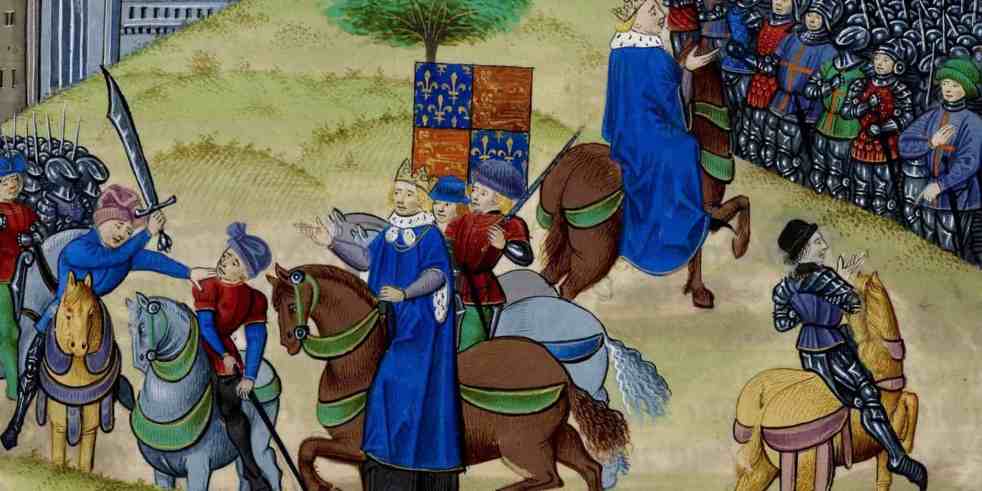
On June 14th, the teenaged King Richard left the safety of the Tower and met with the rebels. The King met them in person and asked them to tell him their grievances. The rebels requested freedom for themselves and their descendants. They requested the end of serfdom, the ability to own land and the guarantee that all men were free. They requested a rent limit, which would hold the power of the landlord in check and an end to the unfair poll taxes. The final item was that “no man should be compelled to work except by employment under a regularly reviewed contract (Jones, 115). Richard II agreed to guarantee the rebels these freedoms and would create official charters for each man to reflect this.
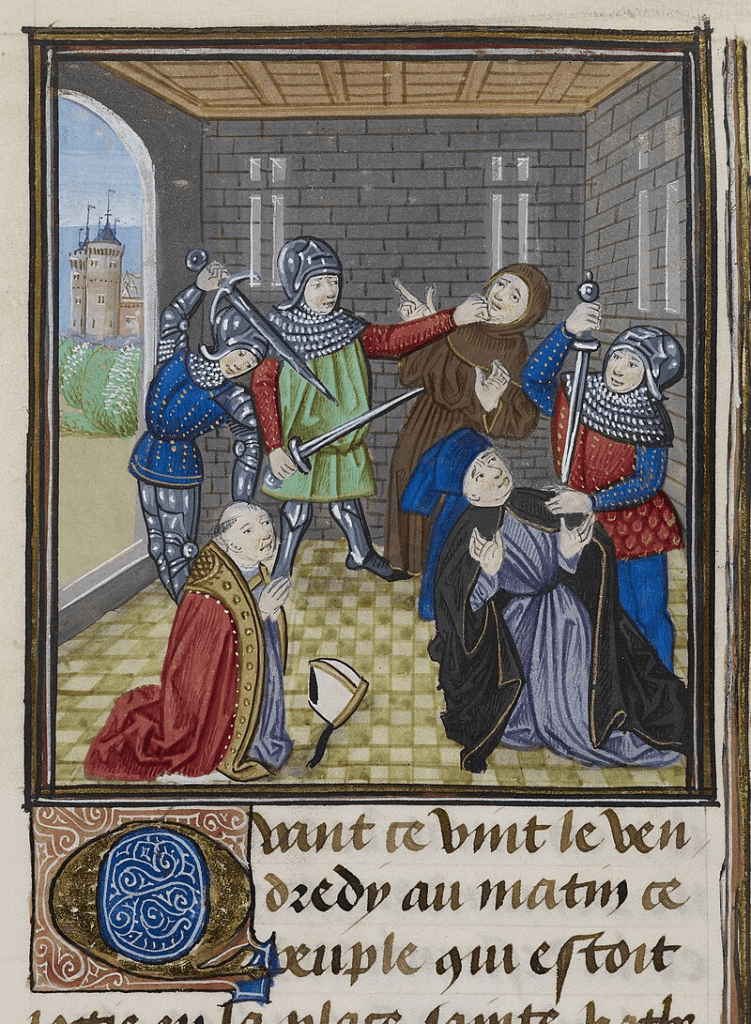
Death of Simon Sudbury, 15th century, British Library, London

Everything seemed to be going well, but the young King would go on to make a grave error. Either due to inexperience or adrenaline, he then stated that the rebels were free to catch those they deemed traitors and bring them before him to be tried by law. The rebels took this as permission to hunt down their enemies and bring about their own justice. That night the rebels invaded the impenetrable Tower of London and met with little resistance. The image of London burning in the background and the rushing mob caused the guards to hesitate. The inhabitants of the Tower (which included many of the King’s council) scrambled to flee due to the fear of what may happen to them. Many were found by the rebels and captured. Simon Sudbury, Archbishop of Canterbury, was pulled from the Chapel while at prayer and brought to Tower Green. He was beheaded by the mob. His head joined others as a trophy which was displayed to London. The rebellion had now fallen into the realm of chaos with many government and tax officials falling victim to these executions.

Richard II had not been in the Tower when the rebels invaded, and he had to have known that his government was in trouble as he watched as the display of heads upon London Bridge increased. A rebellion of this scale from people of the common classes had not happened before. The King had to prepare himself to end this once and for all. He agreed to meet the rebels once again on June 15th at Smithfield. He rode out with 200 retainers and in the company of the Mayor of London, Walworth, who was dressed in armor. The rebels and the royal retinue stood across from each other. Wat Tyler confidently rode out to meet with the royal party. The leader of the rebels, a common man from Essex, was now face to face with the King of England. Tyler gave even more extreme demands, he continued to call for the end of serfdom, but also the end of lordship in its entirety. He called for the abolishment of the Church hierarchy and that all clerical lands should be stripped from the church and divided amongst the people of the parish.  Lastly, he demanded that all men should be free and on equal footing.
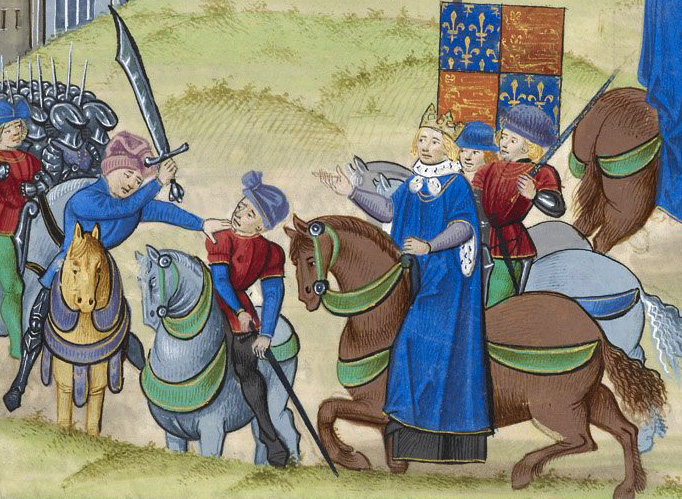
Death of Wat Tyler, British Library, London

In response, Richard II essentially told Tyler to go home. The King was done with attempts to negotiate with the rebels and was ready to complete this whole fiasco. Throughout this meeting, Tyler acted arrogantly in front of the King. This included spitting in front of his Royal Highness and then proceeded to mount his horse without the leave. There seems to have been some heckling from the King’s side which triggered Tyler’s anger and he thrusted his dagger at Walworth. The blow glanced off the mayor’s armor and gave Walworth the excuse to plunge his own dagger into Tyler’s neck. Richard II took a risk and rode out to lead the rebels away from the scene before they could understand what had happened, so they would not take revenge before royal forces could regroup. The rebels choose to follow their King.

With their leader dead, the rebellion began to fall apart. Wat Tyler’s head was put on display and became a sign of the end of the rebel cause.  Richard II reneged all the promises that he had made. Hundreds of rebels were executed as punishment (including John Ball) and smaller rebellions all around the country were put down. The only victory was that the poll tax was canceled. The Peasants Revolt of 1381 was the coming of age moment for Richard II, and many were impressed by his show of bravery in dealing with the rebels. He begin to take more personal interest in state affairs and would become intolerant to any disobedience to his rule. In 1399, he would be overthrown by Henry Bolingbroke (soon to become King Henry IV), forced to abdicate and imprisoned.

The Peasants Revolt only lasted a few months, but it left a great mark in history. It was one of the most intense rebellions during the medieval era and it was led by the common people. It brought ideals to the forefront regarding freedom, equality, and the rights of all people. It brought attention to class divisions and the greed of the nobility and the church. It showed that the common people did have ideas and opinions about politics and the way their country was run. These ideas would carry on into future rebellions around the world.

Sources:

Jones, Dan. Summer of Blood: England’s First Revolution. New York: Penguin Books, 2016.

https://www.1381.online/about/about_the_revolt

https://www.britannica.com/event/Peasants-Revolt

https://www.history.com/this-day-in-history/peasant-army-marches-into-london

https://www.historic-uk.com/HistoryUK/HistoryofEngland/Wat-Tyler-the-Peasants-Revolt

https://www.archives.gov/founding-docs/declaration-transcript

https://www.britannica.com/biography/Richard-II-king-of-England/Tyranny-and-fall

“The Peasants Revolt 1381” https://www.youtube.com/watch?v=jjit4oeWjiY&ab_channel=HomeschoolHistory
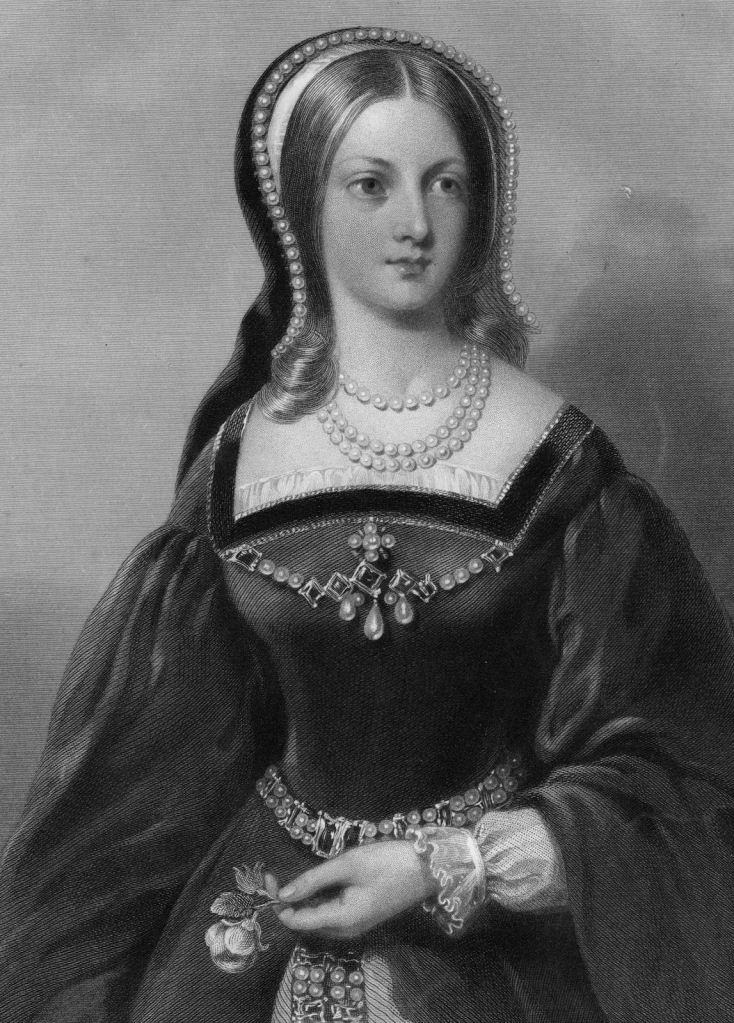
biography · english history · european history · history

Jane Grey: The Doomed Queen

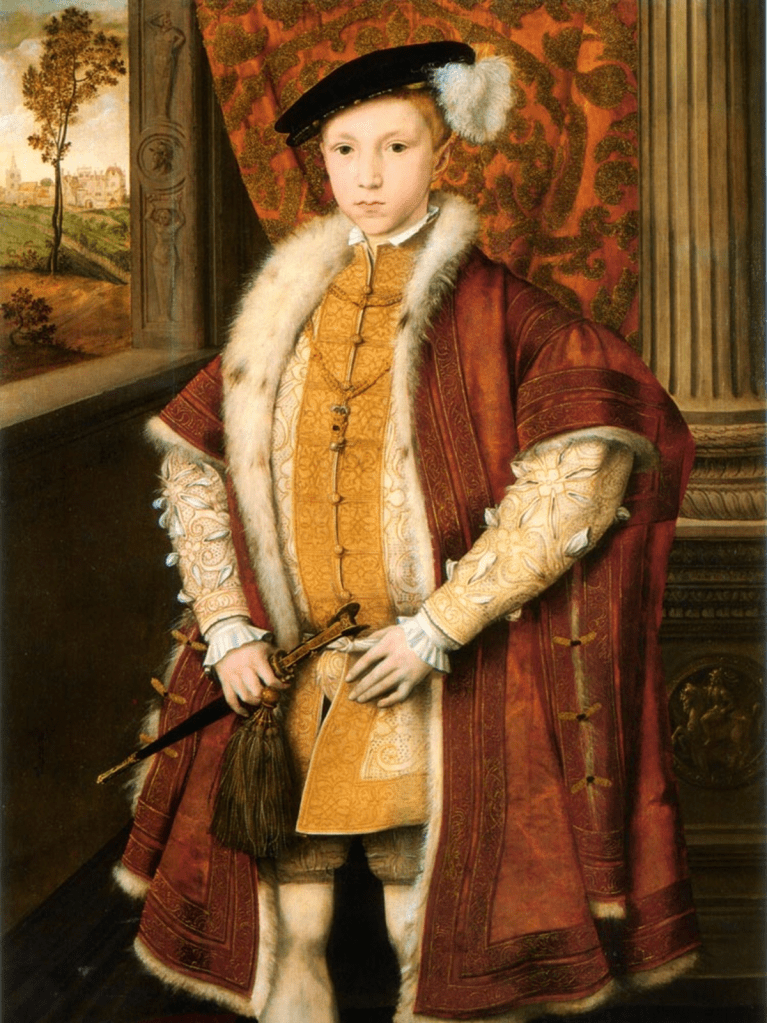
Mary I is considered to be the first queen of England to rule in her own right. Her brother, Edward VI, died at a young age with no heirs which meant, according to Henry VIII’s most recent Act of Succession (1544), his daughters (Mary and then Elizabeth) would be the next to inherit. Yet, Henry VIII never expected that his son’s death would cause a religious crisis. Edward VI and his Council (Edward Seymour, Duke of Somerset and then John Dudley, Duke of Northumberland, among others) had been expanding the Reformation in England. Edward VI was a strong Protestant and his administration created even more radical reforms than the previous king. This included removing images from churches, allowing priests to marry, and mandating the use of The Book of Common Prayer in all churches. The services would be in English and not Latin. Mary I was a devout Catholic and, if she came to power, she would remove all of these changes to return England to Catholicism. This is how the plot to install Lady Jane Grey as Queen of England came about. This is a story of a young girl who was used as a pawn by powerful men which, inevitably, fell to drastic consequences.

Jane Grey (born 1536-1537) was the eldest daughter of Henry Grey, 3rd Marquess of Dorset and Lady Frances Brandon. Frances Brandon was the daughter of Charles Brandon, Duke of Suffolk and Henry VIII’s younger sister, Mary Tudor. Charles Brandon and Mary Tudor’s marriage was considered scandalous at the time as it was done in secret and for love. Eventually, Henry VIII forgave his friend and granted them the title of Duke and Duchess of Suffolk. Through her maternal line, Jane Grey was fifth in line to inherit the throne of England.

Jane Grey was noted to be extremely intelligent and developed a love of learning at a young age. Education became a passion and a comfort to Jane. This continued until the day she died. She began by learning to read, write, and mastered the gift of memorization. She studied the classics and was educated in the Greek and Latin languages. She also became fluent in Italian and French, among other languages. One of her many tutors, John Aylmer, described Jane as “whom God has thought fit to adorn with so many excellent gifts.” She much preferred the company of books to any of the other activities around the estate and court. Roger Ascham, a renowned scholar, visited Bradgate Park (her family home) while Jane’s parents were out on a hunt and enjoying the summer day. He entered the hall where he spotted Jane reading Plato’s Phaedon Platonis in Greek. When asked why she was not out with her parents she replied, “all their sport in the park is but a shadow to that pleasure that I find in Plato.” She would continue to Ascham, “whatsoever I do else but learning is full of grief, trouble, fear, and whole misliking unto me. And thus my book hath been so much my pleasure, and bringeth daily to me more pleasure and more that in respect of it all other pleasures in very deed be but trifles and trouble unto me.”

Jane became extremely well versed in the Bible and religion. She was a passionate Protestant and very devote to her faith. She would study the works of many theologians (including Heinrich Bullinger) and often wrote to them to continue discussions. She was eager to learn Hebrew as well. Her stalwart devotion to her faith was a reason why she was key to many ambitious figures. She was sent to live at the home of Sir Thomas Seymour (uncle to Edward VI and brother to the Lord Protector, Edward Seymour) and the former queen Katherine Parr. It was her parents and Sir Thomas Seymour’s ambition to have her married to Edward VI. At the home of Katherine Parr, Jane was exposed to more debates and intelligent discussions regarding Protestantism and religion. Katherine Parr was also a devotee of the new faith.

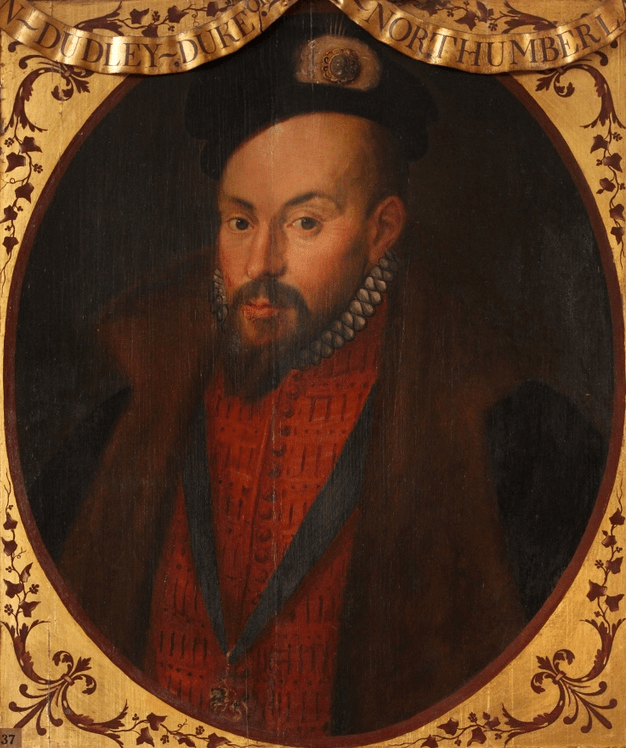
Eventually, the ambitious Seymour brothers began to fall from power. Thomas Seymour, the younger brother, became involved in a shocking scandal as he attempted to woo and marry the Princess Elizabeth (I have written about this more a past post about a young Elizabeth, historynavigator.org/2018/01/18/390/ ). He was later caught breaking into the King’s apartments and in an attempt to kidnap the young King. He would eventually be put to death. The elder brother and Lord Protector, Edward Duke of Somerset, had quickly taken charge of the council and the new king upon Henry VIII’s death. Yet, as time went on his policies failed which caused the crown to become bankrupt. He was also viewed as over-bearing and uncompromising by his fellow councilors. John Dudley, Duke of Northumberland, in a successful coup overthrew the Duke of Somerset. Northumberland got Somerset convicted on false charges then convinced the King to sign his uncle’s death warrant. Northumberland, with his enemy out of the way, took control of the government. Northumberland successful manipulated the boy king. Edward believed that he would be in full control now, but, in reality, Northumberland had control.

Edward VI

Edward VI soon became very sick and was visibly wasting away before the Council’s eyes. It was soon clear to the Duke of Northumberland that all he had fought for was about to crumble away. He knew that if Mary became queen, his time in power would be over. He also knew that Mary would revert all progress they had made towards furthering the Protestant religion in England. It had always been her ambition to bring England back under the Pope. Northumberland began to hatch a new scheme. He was going to manipulate Edward VI, on his sick bed, to re-write the will of his father. They would proclaim Lady Jane Grey as the new heir to the throne. This was actually illegal as Edward VI had not yet reached his age of majority. He was still a minor.

Northumberland quickly arranged the marriage between Jane Grey and one of his younger sons, Lord Guilford Dudley (a young, vain, and spoiled boy) in order for his son to become King. Naturally, Jane was not part of any of these discussions between Northumberland and her parents. She was just a pawn in their power games. She did express her contempt for the marriage and her disgust of Lord Guilford, but knew she had no choice as she was a young woman in this society.

John Dudley, Duke of Northumberland

Northumberland even went as far as to slowly poison the sick king in order to keep him alive longer to make all the arrangements for the succession. It was not hard to persuade him as Edward VI did have a vested interest in keeping the realm Protestant. He was also very devote to his faith and his greatest achievements in his short reign were expanding that religion. Jane Grey was the choice to keep this project going.

Northumberland provided Mary with false updates as to the King’s health in order to lure her into a trap. This just increased Mary’s current distrust of the Duke. “The Duke’s and his party’s designs to deprive the Lady Mary of the succession to the crown are only too plain. They are evidently resolved to resort to arms against her, with the excuse of religion, among others,” commented the Imperial Ambassador. It seems that the Duke’s plans were not as covert as he thought.

Edward VI died on the 6th of July in 1553 at the age of 15. Jane was immediately ordered to meet the Duke of Northumberland and the council at Syon House near London. She was informed that the King was dead and he had named her as heir upon his deathbed. Jane is described as being stunned and troubled. She fell to the ground weeping at the news. It has also been reported that she fainted on the spot. Obviously, she had not been expecting this command and was feeling incredibly stressed. She believed that this whole situation was very wrong. She is said to have cried, “the crown is not my right and pleases me not. The Lady Mary is the rightful heir.” This was not what her father and the Duke wanted to hear. Northumberland is recorded as responding, “Your Grace doth wrong to yourself and to your house!” She was essentially, again, forced to the will of others. She accepted the crown with great reluctance. She was only 17 years old and alone.

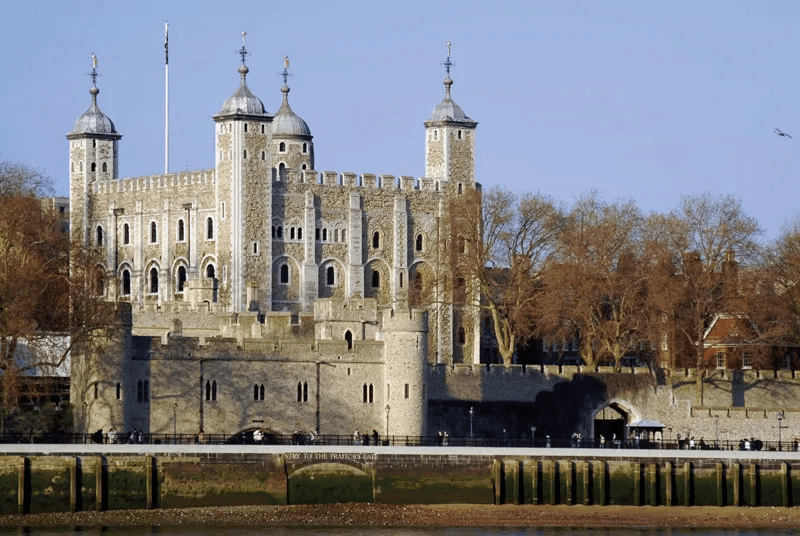
Tower of London

By July 10th, Lady Jane was conveyed to the Tower of London to await her coronation. She was official received as Queen upon her arrival. She was in the company of her husband, her parents, and attendants. Jane tried not to show emotion to give the appearance of a strong queen, despite what she may be feeling inside. She was welcomed inside with all the pomp and ceremony that a Queen of England would deserve. Yet, to the surprise of many of Jane’s supporters, the majority public opinion was not with them. The public wanted Mary, both Catholics and Protestants as she was seen as the true queen based on Henry VIII’s will.

Jane was immediately brought to meet her Council in the Presence Chamber upon her arrival at the Tower. They fell to their knees before their now, rather uncomfortable, Queen. She sat on the throne under the canopy of state. The Crown Jewels were presented to Jane along with the scepter and crown. Jane was encouraged to try on the crown to verify it fit well. Her composure broke and she refused the crown to be placed on her head. It is reported she began to have a panic attack, but, eventually, those of the council finally persuaded her to wear the crown. A proclamation announcing Queen Jane was prepared for distribution across the country, but it would likely be ignored. It must have been difficult for this very young girl to be forced to take this unwanted position. In addition, she was faced with the knowledge that most of the country was hostile to her.

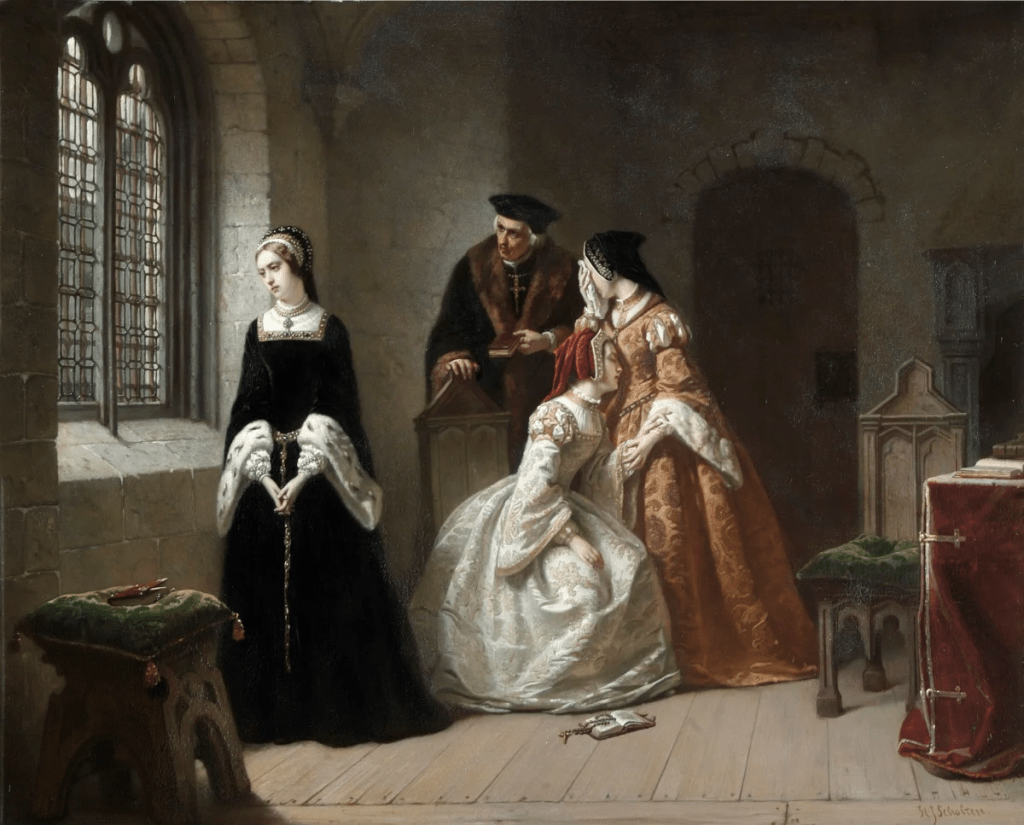
The Last Moments of Lady Jane Grey by Hendrik Jacobus Scholten

Meanwhile, news was received that Mary was prepared to fight for her rightful place upon the throne. She sent her own letter to the council which demanded obedience. In reply, Northumberland sent out a message confirming that Edward VI had chosen Jane as his heir and that Mary and Elizabeth were both illegitimate. All 23 members of the council signed the letter which pledged their loyalty to Queen Jane.

By all accounts, Jane did take her new role seriously. If she was going to have to do this then she wanted to make the best decisions for the realm. She confronted her husband, Guildford Dudley, and made it very clear to him that she would never have him crowned as king. She would only allow him the title of consort if Parliament petitioned her to. Guildford did not share her royal blood and had been forced on her due to the ambition of two fathers. It is easy to see why she would not trust him. Guildford was also very selfish and irritable, not good qualities for a king. Guildford immediately ran to his mother, the Duchess of Northumberland, and, together, they attempted to force Jane’s hand. Jane proved to be stubborn and assertive. She would not budge on this issue and they were forced to obey her order. She held firm, but still felt a great deal of stress and anxiety. This was a position she never wanted and a marriage she never wanted. She was angry, anxious, and overwhelmed. It was amazing that she could still hold firm to who she was at her core. She knew in these coming days she would have to assert herself and her authority.

Attempts were made by Northumberland and his sons to rally an army to try and capture Mary, but they were failing. Jane had written many letters and multiple proclamations had been made across the country to support her as Queen, but they were falling on deaf ears. Mary kept attracting more support which increased her strength against Northumberland. More Lords were declaring for Mary which caused the Council to panic. Jane and her father were unable to keep control. This plot was quickly disintegrating. Men were deserting Northumberland’s army and Mary’s continued to grow. The Council abandoned Jane and she was left with only her parents and husband at her side. Jane could only wait and see which way the tide would turn.

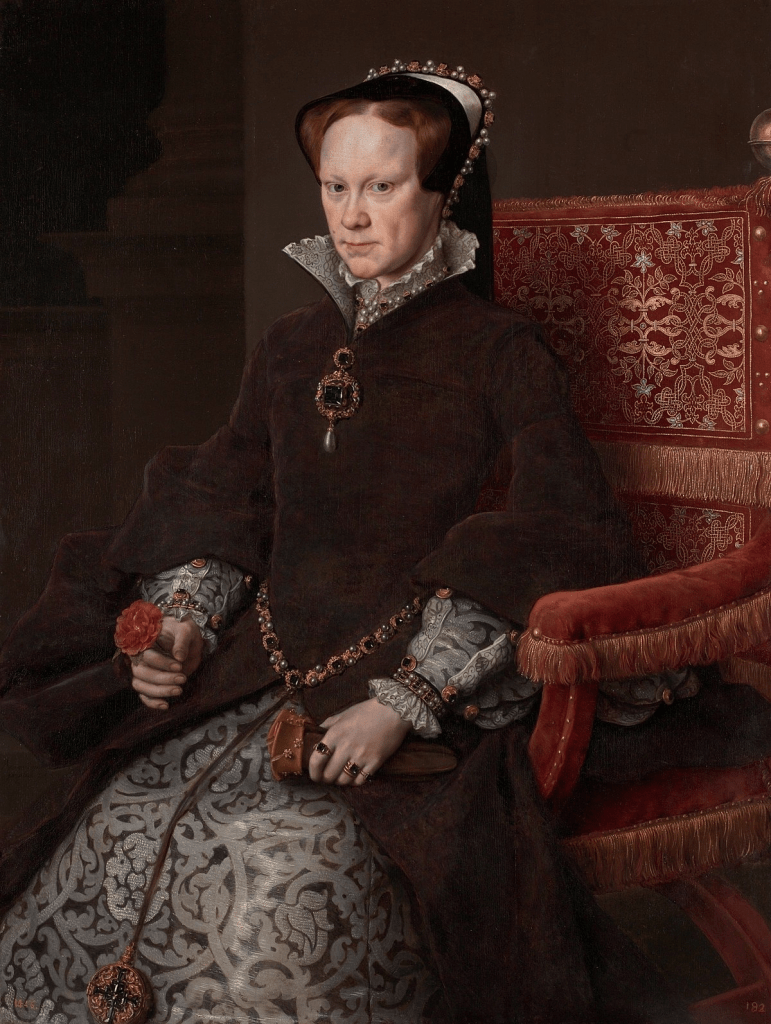
Mary I, daughter of Henry VIII and Katherine of Aragon

On July 19th, the Mayor of London had commanded that Mary be proclaimed Queen throughout the city. The bells were rung and the crowds were immense in support for Mary Tudor. People were shouting in the streets and made fires and partied until the evening in support of their true queen. It was finally over for Jane.

In the deserted rooms of the Tower, her father told her quite plainly that she “must put off your royal robes and be content with a private life.” Jane responded that she was “much more willing put them of than I put them on…Out of obedience to you and my mother I have grievously sinned. Now I willingly relinquish the crown. May I not go home? Unfortunately, her father ended up abandoning Jane in the Tower as well as he went to proclaim his loyalty to Mary. He left his daughter to whatever fate that the new queen would decide was just. Jane essentially became a prisoner in the same place that had been her palace just hours before. Jane was alone once again as every who had once “supported” her were now trying to save their own skins. Her nine day reign was forgotten.

Queen Mary listened to her Councilors pleas for forgiveness and request for her pardon (which she did offer to most). She even acknowledged that Jane had been forced by other ambitious people to take the throne and would likely be pardoned as well. The scapegoat would be the Duke of Northumberland. Mary was determined to capture and mete out punishment. She sent out the order for his arrest. After a long chase, he captured and imprisoned with four of his sons.

On August 22nd, the Duke of Northumberland was executed on the Tower Green. Jane likely saw him as he made his way to the block through the window of her cell. She disapproved greatly that her father-in-law converted to Catholicism in a last ditch effort to save himself. She already had viewed him as a wicked man, but this was a different matter. Jane was so devoted to her faith that she would rather die than abandon it. While she was imprisoned, she spent a lot of her time studying the bible.

Jane wrote a letter appealing to Queen Mary. She acknowledges her guilt, but reveals her remorse.

Although my fault be such that but for the goodness and clemency of the Queen, I can have no hope of finding pardon…. having given ear to those who at the time appeared not only to myself, but also to the great part of this realm to be wise and now have manifested themselves to the contrary, not only to my and their great detriment, but with common disgrace and blame of all, they having with shameful boldness made to blamable and dishonourable an attempt to give to others that which was not theirs…[and my own] lack of prudence…for which I deserve heavy punishment…it being known that the error imputed to me has not been altogether caused by myself. [The Privy Council]….who with unwontd caresses and pleasantness, did me such reverence as was not at all suitable to my state. He [Dudley] then said that his Majesty had well weighed an Act of Parliament…that whoever should acknowledge the most serene Mary…or the lady Elizabeth and receive them as the true heirs of the crown of England should be had all for traitors…wherefore, in no manner did he wish that they should be heirs of him and of that crown, he being able in every way to disinherit them. And therefore, before his death, he gave order to the Council, that for the honour they owed to him…they should obey his last will…As to the rest, for my part, I know not what the Council had determined to do, but I know for certain that twice during this time, poison was given to me, first in the house of the Duchess of Northumberland and afterwards here in the Tower…. All these I have wished for the witness of my innocence and the disburdening of my conscience.’

Mary understood how little agency women had in their world and, it seems, truly wanted to pardon Jane Grey. Once Mary was secured with a Catholic heir, the goal would be to release Jane from prison. Unfortunately, Jane’s father once again made a decision that was not in his daughters best interest. He participated in the Wyatt Rebellion. With news that Mary would be marrying foreigner and Catholic Prince Philip of Spain, there was displeasure across the country. This unsuccessful rebellion was led by Sir Thomas Wyatt and other nobles who opposed Mary’s strict policy of Catholicism. This was quickly dealt with, but now Mary had no choice but remove Jane and Guilford as they were now severe threats to her. Her future husband, Philip, would not come to England until the threat was removed. Jane could be used as a future figurehead for these discontented groups. Both were found guilty of high treason and sentenced to death.

Jane spent her last days in prayer and writing farewell letters to her family and friends. To her sister Katherine:

“Live still to die, deny the world, deny the Devil and despise the flesh. Take up your Cross. As touching my death, rejoice, as I do, and adsist that I shall be delivered from corruption and put on incorruption. Farewell, dear sister; put you only trust in God, Who only must uphold you. Your loving sister, Jane Dudley

The Queen, likely feeling guilty, did offer Jane and her husband the chance to convert to Catholicism, but both refused. On February 12th, Guildford and Jane were executed.

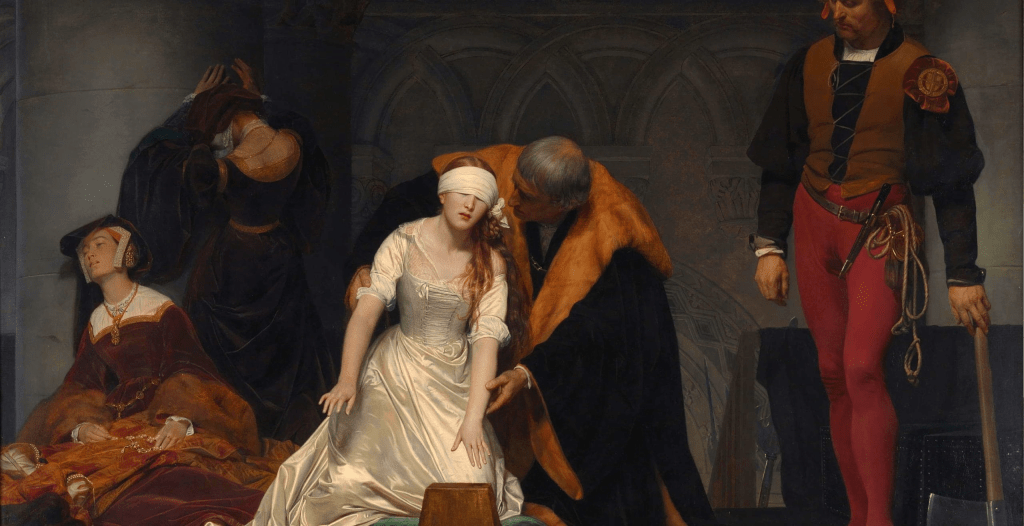
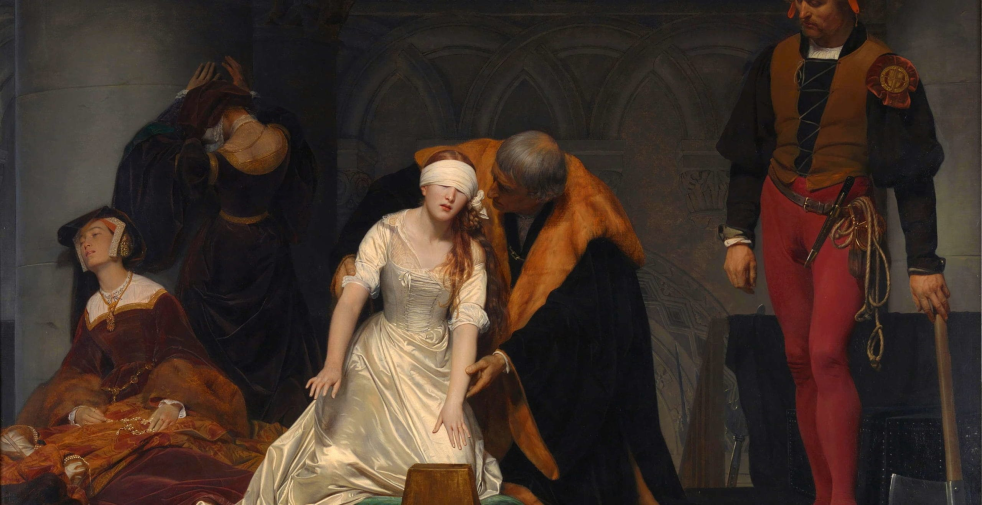
The Execution of Lady Jane Grey by Paul Delaroche, 1833

If justice is done with my body, my soul will find mercy with God. Death will give pain to my body for its sins, but the soul will be justified before God. If my faults deserve punishment, my youth at lease, and my imprudence were worthy of excuse. God and posterity will show me more favour.” This is from Jane’s farewell statement composed the night before her death. She requested that the executioner “dispatch me quickly”. She tied the blindfold over her eyes and reached for the block. When she could not feel it, she began to panic crying out “Where is it? What shall I do?“. She was assisted and the deed was done.

Jane Grey’s story is a sad, tragedy. A young and extremely intelligent girl was taken from life much too early due to the ambitions of men. Men who abandoned her once the tide was no longer in her favor. She was only 17 years old. She reigned for nine days, which is often forgotten in the history of the monarchy. There are not any surviving portraits of her. Would she have made a good queen? Possibly, she seemed to be strong-willed and highly educated. It is impossible to say what could have been. She became a Protestant martyr to many people who then had to endure Mary I’s reign. Almost 300 Protestants were said to have been executed (by fire) during her reign, which earned her the nickname of “Bloody Mary”.

Sources:

The Children of Henry VIII by Alison Weir

Crown of Blood : The Deadly Inheritance of Lady Jane Grey by Nicola Tallis

https://www.historic-uk.com/HistoryUK/HistoryofEngland/Lady-Jane-Grey/

https://www.historyofparliamentonline.org/schools/content/parliament/ks3-reformation-parliaments-edward-vi-1st

https://www.smithsonianmag.com/smart-news/tragic-story-englands-nine-day-queen-180964042/

https://www.hrp.org.uk/tower-of-london/history-and-stories/lady-jane-grey/#gs.d3y35m

https://www.thecollector.com/lady-jane-grey-the-nine-day-queen/

https://www.thehistorypress.co.uk/articles/the-execution-of-edward-seymour-duke-of-somerset/

Hanson, Marilee. “Letter of Lady Jane Grey to Queen Mary I, 1554” https://englishhistory.net/tudor/letter/letter-lady-jane-grey-queen-mary-1554/, February 27, 2015

The Wyatt Rebellion of 1554

LADY JANE GREY: THE NINE-DAYS` QUEEN

American History · english history · european history · history

The Great Hunger 1845-1852

I have been doing research lately on the Irish potato famine (1845- 1852). The famine was a terrible disaster. Countless lives due to a blight affecting the potato crop which was the primary food source for a large part of the population. It is likely that many lives could have been saved if certain aspects were handled differently. This is easy to say in hindsight, but at the time the future was less clear. During this time there was a lot of fear, uncertainty, change in the workplace, and misinformation (sort of like what we have just lived through these past two years). There was a lot of information to sift through, but in this post I hope to provide the best summary of events.

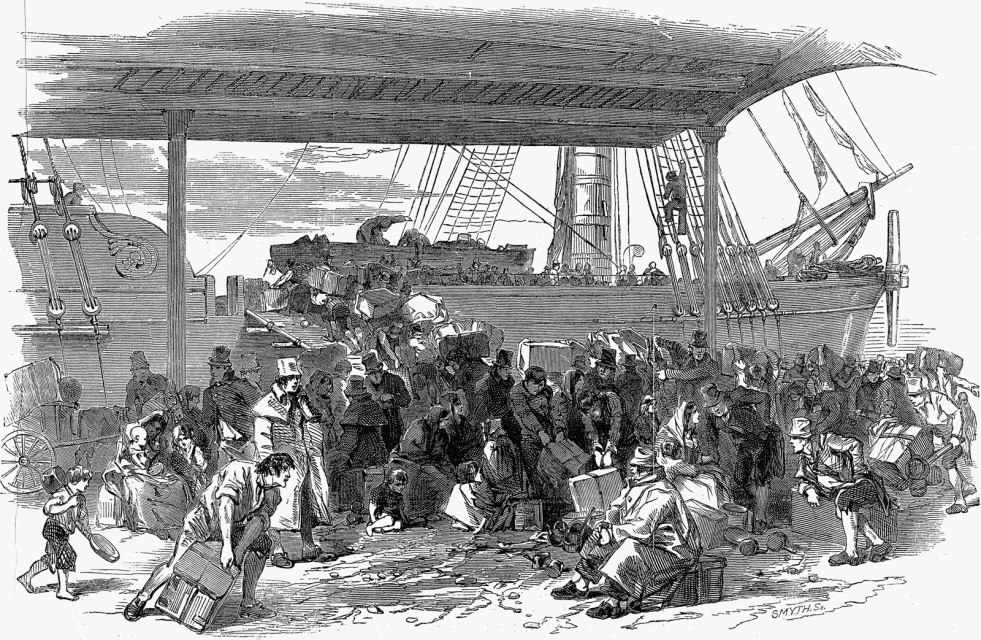
In 1841, the population of Ireland was calculated at about 8 million people. By 1851, there was only 6.5 million remaining. 1.5 million are recorded deaths (likely to be much more than this) and 2 million as a result of mass emigration. This single event changed the shape of Ireland permanently. Pre-famine Ireland had quite a large population boom at the end of the 18th century. Despite the recent Anglo-Irish Union, Great Britain was growing wealthier and Ireland more poor. Once the war against Napoleon was complete, Irish exports were no longer in demand. Industrialization in Ireland slowed down and was unable to keep up with the the industrial revolution in England (which was now given priority). With the collapse of industrialization and manufacturing in Ireland, many people were pushed back to the land.

Continue reading “The Great Hunger 1845-1852”
biography · english history · european history · history

Lady Mary Wortley Montagu- Advocate for Vaccines

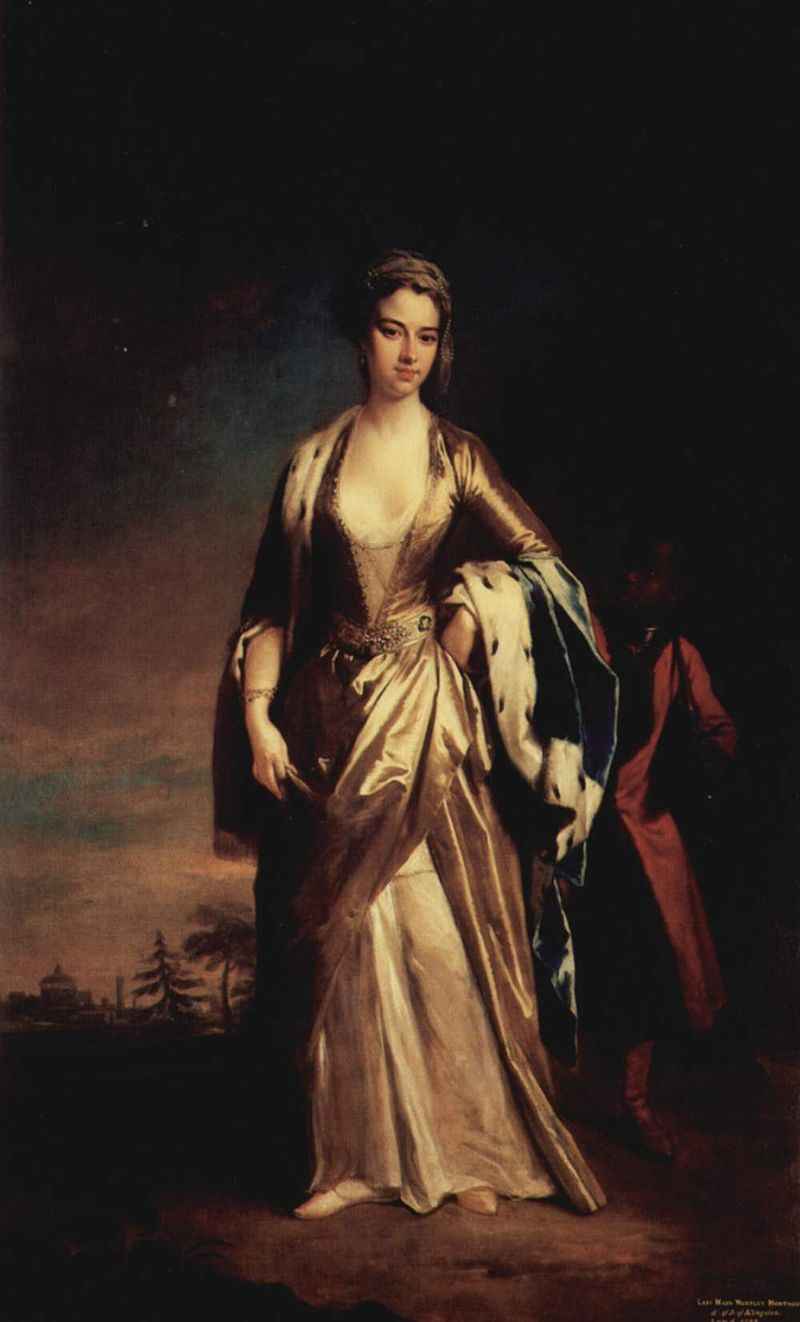
Vaccines have long been important in our current medical care. As children, we are protected from harmful diseases due to the development of these vaccines like measles, tuberculosis, meningitis, etc. The list goes on and on. Most recently, the development of the COVID-19 vaccine has allowed many of us to take steps in ending the pandemic that has changed the face of our world this past year. Many deadly diseases have been eradicated due to the development of vaccines which allows for better living conditions and longer lifespans. As of 1980, smallpox was declared to be eradicated. That would not have been possible without some of the work that Lady Mary Wortley Montagu did in order to fight for inoculation. As an upper class English woman of the 18th century, most of the public sphere was off limits. This included the medical field where women were not given the education or taken seriously. They would have to trust in men knowing what was right for their bodies. Yet, Montagu was different. As an early feminist, she was extremely bold. She did what she felt she needed to do and fought for the causes that she thought were important. This included the early smallpox vaccination.

Continue reading “Lady Mary Wortley Montagu- Advocate for Vaccines”
biography · english history · european history · history

The Strength of Queen Katherine

In this post, I wanted to focus on Queen Katherine of Aragon, the first wife of Henry VIII of England. With all the focus on Anne Boleyn, Katherine is typically remembered for her struggles later in life. She is remembered as the old, unattractive, stubborn woman who was being replaced by her young and vivacious lady in waiting. In reality, Katherine of Aragon was an extremely strong woman, a very popular queen and a role model for many of her subjects. She was intelligent and educated. She was also loyal to a fault. She was born of Queen Isabella (who was the queen of Castile in her own right) and King Ferdinand. She was trained for queenship since she was a toddler and prepared entirely for her role as a leader. She was integral to the success at the Battle of Flodden. It is easy to see why she remained popular with England’s subjects even after the King had decided to put her aside.

Continue reading “The Strength of Queen Katherine”
biography · english history · history · Scottish History

Battle of Bannockburn and Robert the Bruce (Part 3)

Part One ( The Great Cause (Part 1) )

Part Two ( William Wallace’s Rebellion (Part 2) )

In 1297, the Robert the Bruce was 22 years old. In part 1 of this series, his grandfather (also named Robert Bruce) was one of the contenders for the Scottish throne but lost to John Balliol. The Bruce family was still one of the most powerful Scottish families and were determined to see their claim to the throne fulfilled. They sided with Edward I when the first rebellions broke out.  This was because they refused to back their rival John Balliol and hoped others would support their claim. Now, the young Robert Bruce, against the wishes of his father, decided to join the Wallace’s rebellion in 1297. In 1298, Bruce was named Guardian of Scotland. His rival, John Comyn (the nephew of John Balliol), was also named co-Guardian. The men disliked each other and again were beginning to split into factions, just like their previous relations. Yet, despite these factions, in 1302 Edward received oaths of allegiance from all parties. Was young Robert the Bruce going to honor this oath?

Continue reading “Battle of Bannockburn and Robert the Bruce (Part 3)”

biography · english history · european history · history · Scottish History

William Wallace’s Rebellion (Part 2)

In part one of this series (The Great Cause (Part 1)), Edward I had forced the Scottish nobles and their King to swear an oath of allegiance to him as their “overlord”. As he believed he had finally subjugated Scotland, the English king attended to affairs in other parts of his kingdom. After the betrayal of John Balliol and a failed rebellion, Edward I completely occupied Scotland. He sent soldiers to ensure his rule would continue. The people of Scotland were taken advantage of and abused under this military occupation. Scotland needed a new champion to take up their cause for freedom. Their nobles had failed them with their infighting and military defeats, so it was time for one of their own to pick up his sword.

William Wallace’s background is hazy and was thought to be the son of a minor feudal lord in Renfrewshire or Ayrshire. He seems to have grown up with military training which contributed to his later success. He was a very tall man . He was over six feet when the average male height was about 5’6” (though this physical characteristic was highly exaggerated in legends). Walter Bower (author of  the Scotichronicon) describes him as having “a certain good humour, had so blessed his words and deeds with a certain heavenly gift, that…he won over to himself the grace and favour of the hearts of all loyal Scots.” Bower also described him as “fair in his judgments”, compassionate, patient, and a skilled orator. Yet, English sources would describe him as “a vagrant and a fugitive”, a “bloody man”, and “a chief of brigands” (Morris, pg 303).

Continue reading “William Wallace’s Rebellion (Part 2)”

english history · european history · history · Scottish History

The Great Cause (Part 1)

This month I was supposed to be travelling to Scotland with one of my best friends. Scotland has been a dream trip of mine for a while, but it seems 2020 had other plans for me and so many others in similar situations. I hope to re-schedule, but, in the meantime, I would love to share some Scottish history in a new three-part series. This series will focus on the First Scottish War of Independence (1296-1328). This was a time that was filled with fascinating characters, intriguing military battles, and cunning tactics. On the English side, we have Edward I, “The Hammer of the Scots”. Edward was one of the strongest monarchs in English history, but also has a reputation of being a tyrant. Later, his weaker son, Edward II, will struggle to carry on his father’s legacy. There are some familiar names on the Scottish side such as: William Wallace and the legendary King Robert the Bruce. Along the way there will be a sprinkling of minor characters, including a brilliant sneaky re-capture of Edinburgh by Thomas Randolph, Earl of Moray. I am greatly looking forward to this series and I hope it will provide an interesting read!

The Lothians - East, West & Midlothian | VisitScotland
A photo of Edinburgh, which was our travel destination (https://www.visitscotland.com/destinations-maps/edinburgh-lothians/)

In 1286, Alexander III of Scotland died and ended what had been considered a golden age of the Scottish kingdom. At 45 years old, King Alexander decided to risk it all and take a dangerous ride through a stormy night in order to spend the night with his new young bride of twenty-two years old. The next morning, he was found dead at the rocks at the bottom of a cliff. It was a disaster for Scotland as Alexander III had survived all his children and his new young wife had not yet produced an heir. With the throne up for grabs, powerful factions began to form which threatened the stability that had been a constant in the prior Kings reign. The main players were John de Balliol and Robert Bruce (senior, his grandson will become the more famous Bruce). Rebellion and civil war threatened Scotland due to the succession crisis and infighting between the two factions.

Continue reading “The Great Cause (Part 1)”

biography · english history · european history · history

Book Spotlight: The Five: The Untold Lives of the Women Killed by Jack the Ripper by Hallie Rubenhold

In this post I wanted to highlight a new book by author and historian, Hallie Rubenhold. The Five is a history that involves the now infamous story of Jack the Ripper. Jack the Ripper was a serial killer that terrorized Victorian London. In the modern area, it seems his killing spree has almost been glorified through the media and tourist attractions. It is all about Jack the Ripper, his mysterious identity, and his modus operendi. His victims are only remembered as “prostitutes”, but can any of us even recite their names?

Continue reading “Book Spotlight: The Five: The Untold Lives of the Women Killed by Jack the Ripper by Hallie Rubenhold”

Ancient History · english history · european history · history

Roman Frontiers: Antonine Wall

The final season of the popular show Game of Thrones is almost upon us, but much of the world that George R.R. Martin created was inspired by true events. This would include Hadrian’s Wall in England and the Antonine Wall in Scotland. These walls were the boundary of the known world for the Romans during the second century. Just as fan favorite, Jon Snow, looked out into the great unknown from atop the icy Wall, it would have been just as intimidating for the Romans who looked over these historical walls at the expanse of Scotland. They were at the edge of their known world, which could have been very intimidating. So, while there may not have been white walkers, to the Romans, there could have been anything.

Image result for the wall game of thrones
The Wall from HBO’s Game of Thrones

With this post I wanted to pay more attention to the lesser known Antonine Wall rather than the more established Hadrian’s wall. The Antonine Wall was the furthest point that the Roman empire stretched into Britannia. It was only manned for about twenty five years before the wall was abandoned. The wall cut modern Scotland in half as it crossed the land between Clyde to Forth (about 37 miles long). It was made mostly out of layers of turf rather than stone (like Hadrian’s) with a deep ditch that ran along with it. Forts would have been laid out along the wall, including Rough Castle, which would hold the 7,000 men that would have been stationed there. There would have also been a military service road that connected those at the wall with the rest of the empire in Britain. Continue reading “Roman Frontiers: Antonine Wall”