biography · english history · european history · history

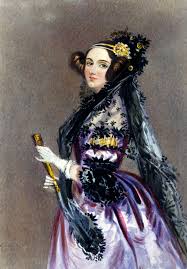
Lady Ada Lovelace: “Enchantress of Numbers”

While watching an episode of Victoria on Masterpiece PBS, we were introduced to a fascinating woman of science, Lady Ada Lovelace. Her character intrigued me so much because of how unique she was for the time that I went on to research her even more! I wanted to focus a blog post on her and it has been challenging. Much of the math/computer science that Ada works with is complicated and does go over my head. I got some helped and ended up learning more about computers than I had known before. I persevered with this blog post because I think she is one of the forgotten people of history who left an important legacy. Those interested in computer history may know her name, but I had never heard of her until that episode of Victoria.

Image result for ada lovelace

Lady Ada Lovelace is known for writing the first modern computer program in the 1840s. I was shocked when I first heard this statement because I ignorantly thought that there was no technology like a computer in the Victorian Era! When I think of that technology, I think of what we know in the modern day. In the Victorian era, there was not a computer in the modern sense, but there was the Difference Engine. The Difference Engine was created by Charles Babbage (who will play a large role in Ada’s story).  The Difference Engine was a remarkable new technology for the era and was essentially a calculator, but it was only able to compute one operation of mathematics. The Difference Engine was a very large machine that, instead of using circuits to solve the problems, it used actual physical pieces. Ada herself was fascinated by this machine. Continue reading “Lady Ada Lovelace: “Enchantress of Numbers””
Ancient History · english history · history

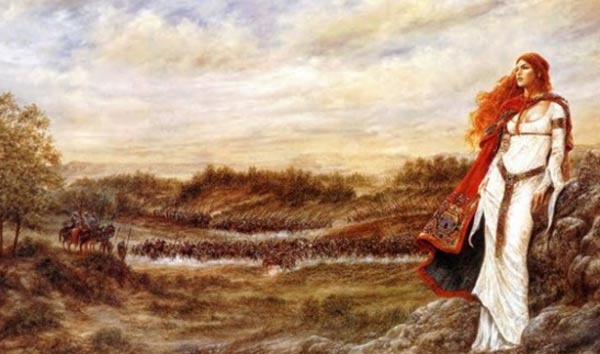
Boudica’s Quest for Vengeance Part 2

Part 1! Boudica’s Quest for Vengeance Part 1

As seen in my previous post, Boudica had surpassed all expectations. She shocked the ancient world by inspiring an army of thousands of Britons to finally take back what had been theirs originally. They were fighting against the abuses her people had faced for seventeen years at the hands of the Romans. Boudica and her warriors had burnt the great city of Camulodunum to the ground and decimated the ninth legion. Fear spread quickly across the the land, but Governor Paulinus was not about to be defeated…

Boudica’s next target was Londinium (modern day London), which (at the time) was a relatively new city. It was created to be a trading port with the continent and was mostly populated by traders, craftsmen, and wealthy citizens. Londinium was estimated to have a population of about 30,000. This wealthy city was ripe for looting and, unfortunately for the citizens, there was no military presence (especially with the ninth legion now inoperable). The second legion was called in to fight, yet they failed to arrive. The people of Londinium knew that they were ill prepared. Continue reading “Boudica’s Quest for Vengeance Part 2”

Ancient History · english history · history

Boudica’s Quest for Vengeance Part 1

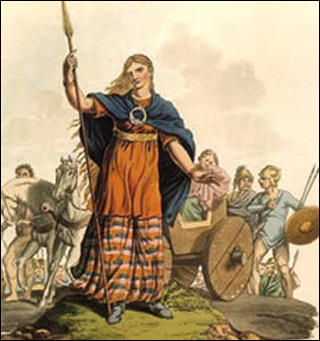
This is a post (well now posts) I have been looking forward to creating for a while. It is the story of Boudica, the warrior queen, who led her army of Britons on to fight against their Roman oppressors in 60 AD. Not much is known about her personally, yet her legend lives on through books, shows, statues, art, etc. The name Boudica is easiest to understand as a Celtic version of Victoria, this meaning Victory. There is speculation whether this was truly her name, or a title given to her. Before I begin her tale, we must discuss some background knowledge of Romanized Britannia that will give context to the story. Also, note that most of the primary sources historians use are Roman writings of the events and archaeological evidence. There are no written sources from the Britons themselves. Continue reading “Boudica’s Quest for Vengeance Part 1”

biography · english history · history

Elizabeth’s Journey to Queenship

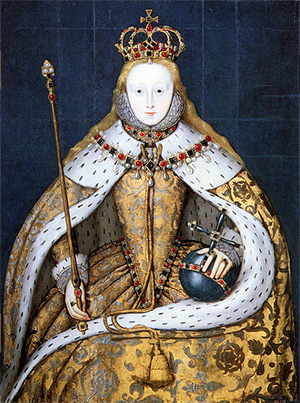
To the North, South, East, and West she was proclaimed Queen and to each proclamation an approval was received from the congregation. The moment she had waited for had come. She made a solemn oath in front of God to defend the Church, uphold the laws, and use justice and mercy in judgements. She knelt and accepted the anointing from the bishop of Carlisle. Slowly she stood up, taking in the moment, and went to the nearby pew to put on the robe of purple velvet and a mantle of gold. Though extremely nervous, she had to show strength in front of her people.

Sitting upon the chair of state before the high altar she was able to view the majesty of Westminster Abbey. So much history surrounded her; how many of her predecessors were crowned here as well? Would she be hated or loved as they all went through?

The ring representing England and her people was placed on her right hand, as if she was getting married. First, St. Edwards crown was placed on her head then removed. Next, the imperial crown was placed in the same position. At a full seven pounds she could barely lift her head to see the crowd, but she would not show weakness. A lighter crown was then replaced for the rest of the ceremony (did her mother once wear this crown as well?) and one by one the lords and bishops came up to give homage to her; Lords who may have opposed her just a few months ago. She stifled a laugh from the irony of this day; the daughter of the “Great Whore” had now become the sole Queen of England…… Continue reading “Elizabeth’s Journey to Queenship”

english history · european history · history

The Story of the Christmas Tree

Merry Christmas Eve! I hope everyone’s Holiday Season has been amazing!

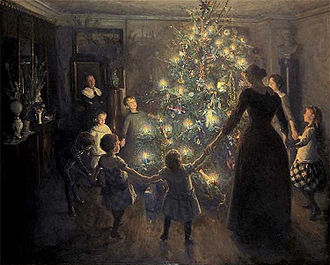
In this post I wanted to examine the tradition of the Christmas tree. Many believe that Victoria and Albert were the first to bring the Christmas tree to England, but (and this was new to me as well) it had already been an existing tradition for the royal family. The first known Christmas tree was actually set up in the Queen’s Lodge, which is located in Windsor castle, by Queen Charlotte Continue reading “The Story of the Christmas Tree”

english history · history

The Royal Marriage Act of 1772

This week in history marks the anniversary of Edward VIII’s abdication of the English throne in favor of marrying the woman he loved, Wallis Simpson, which took place in 1936. Edward had met Simpson in 1931 and they became an item by 1934. This relationship caused a great scandal because Simpson was already married to Ernest Aldrich Simpson…her second husband. She was an American, she had already been divorced once, and was now planning to divorce again to marry Prince Edward. This was unacceptable at the time for a future royal, let alone the future queen. Society was very different then and divorce was not approved by the Church of England of which the monarchy is still the head of (thanks to Henry VIII…who ironically gained a divorce!). Since Edward was the eldest son of George V; he was subject to the Royal Marriages Act of 1772.

In 1772, George III created this act as a reaction to his brothers both marrying “commoners” which was some kind of disgrace to the crown (though maybe it was just because George III was jealous that he could not have married for choice). This act states that any descendant of George II could not marry without the currently reigning sovereigns consent. This consent had to be documented and any marriages that did not have this consent were considered null and void. Continue reading “The Royal Marriage Act of 1772”

art history · english history · history

Preserved in Time: The London Shipwreck

As a kid I dreamed (and lets be real still wishes) of being an archaeologist. You get to travel the world and discover the lost secrets of history. You get to be the first to touch something that no living person has touched in hundreds of years. I imagine it would feel like you would have some connection to those who came before you and, honestly, I want to feel like I am experiencing what others before me did. It would almost be like you were time traveling. Unfortunately, I grew up and the realities of life set in such as student debt, a good salary, and finding stability. A girl can still dream though!

I bring this up because I have been following an amazing archaeological find of our current day. Found in the Thames River in London, a great ship from the 17th century was found impeccably preserved. Talk about traveling back in time! Much of The London, which was the name the ship was known as, was preserved under a deep layer of mud and silt. Continue reading “Preserved in Time: The London Shipwreck”

art history · english history · history

Will the real Anne Boleyn please stand up?

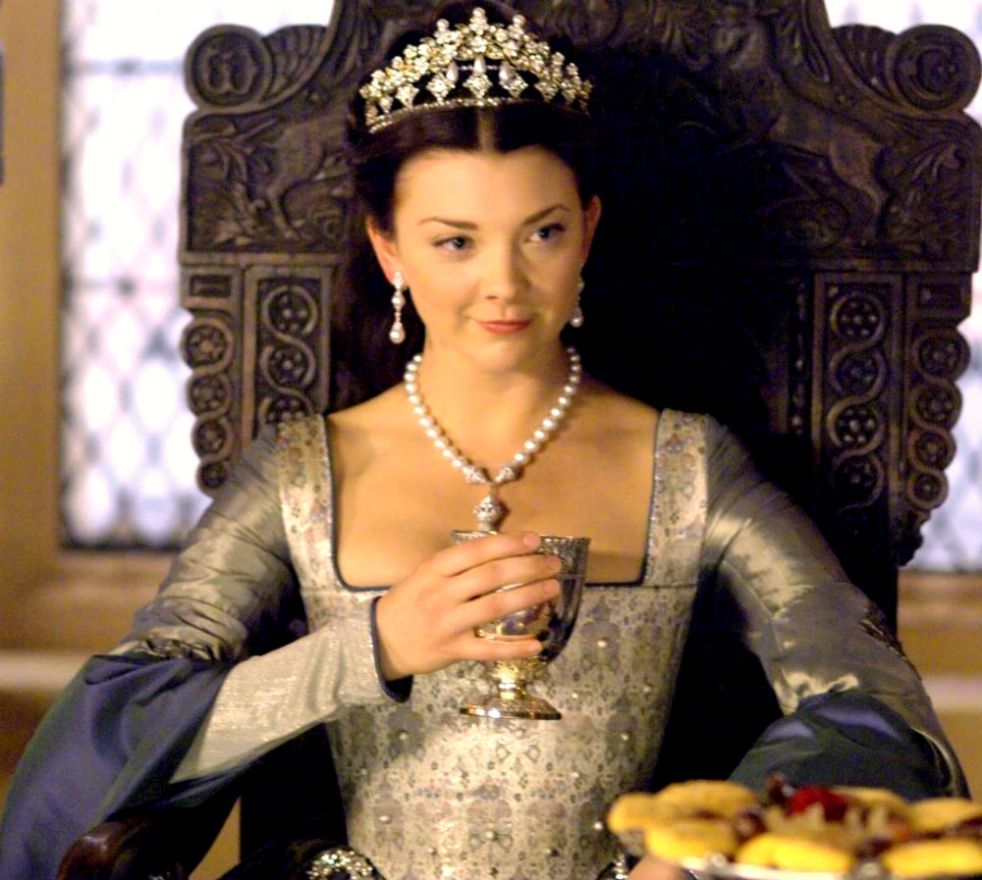
Why are we so fascinated to know what a woman who lived centuries ago truly looked like and why this particular woman? In the media, Anne Boleyn has been characterized in three different ways. She has been romanticized and sexualized, she has been portrayed as a cold-hearted witch, and she has been portrayed as a martyr/victim of a tyrannical king. This seems unfair to a real woman who actually lived and had many of the same stresses as we do.

She is so fascinating to us because we all want to know how she kept the rapt attention of Henry VIII for seven long years (without becoming his mistress) in order to achieve marriage and queenship. Henry was so enamored by this woman that the Imperial ambassador in England recorded that “The King cannot leave her for an hour.” Henry was risking excommunication and war for this one woman. Continue reading “Will the real Anne Boleyn please stand up?”

biography · english history · history

The Tale of Bloody Mary

Remember that weird ritual we did back in elementary/middle school in order to scare ourselves? If we would go in front of a mirror at night, or exactly at midnight, or whenever they told you and say bloody Mary three times in the dark she would appear in the mirror before you (and apparently curse you or something). When I was in elementary school that used to scare the crap out of me and I refused to even partake. I wouldn’t even look into a mirror at night for a brief period (I know I was a wimp!), but then I grew up and wondered…why are we so scared of Mary Tudor? If I could get this “ritual” to work I would do it to ask her questions about history and what life was like in her time (because I am a nerd)! But, anyway, I wanted to write a post about how she got her name and, well, why I feel bad that she has been remembered this way in a child’s game. Continue reading “The Tale of Bloody Mary”

Ancient History · english history · history

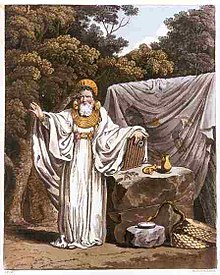
The Power of the Druids

It’s almost Halloween so let’s talk about magic in history! I’ve always wanted to learn more about the Celts and especially the druids. Unfortunately, almost nothing is known about the druids except through outside Roman sources, which are naturally biased. There were no written records coming directly from the druids or the Celtic civilizations. There are a lot of misconceptions about the druids due to Roman influence, but also many things that I personally did not know before.

The druids were considered extremely powerful in Celtic society and were basically untouchable. They were society’s religious leaders, people of wisdom and essentially their own separate entity which could overrule most others in society. Being the highest members in society it was stated that they were exempt from taxes, from military service, and almost above the law. They were able to, in a way, to excommunicate people Continue reading “The Power of the Druids”